One-to-One Online English Literature Tutoring
Literature is examined closed book. Knowing the text is the starting point — the marks go to a student who can select the right eight words from memory and argue with them. That is what lessons practise.
Four Things English Literature Asks For That English Language Does Not
Most students sit both GCSEs and are stronger in one. The split is worth understanding early, because the revision that works for English Language does very little for Literature.
Examined closed book
Students sit GCSE Literature without their texts. Every quotation has to be carried in from memory and used precisely, which puts a selection-and-recall skill on top of the analysis. It is the most common reason a student who knows a novel well still comes out with a disappointing grade.
Four assessment objectives, not one essay
Personal response with evidence, analysis of language, form and structure, the context a text was written and read in, and — on one question — technical accuracy. Their share of the marks differs by board and by question, and a student serving only the first two caps themselves without being told why.
An unseen element that cannot be revised
Unseen poetry is a method rather than a body of knowledge, which is exactly why it is the part most often skipped in revision. Practised often enough, an unfamiliar poem stops being frightening and starts being a procedure.
Comparison is its own skill
Half an answer about one text, half about the other and no comparison is the classic way to lose a comparison question. The marks live in the connective sentences most students leave out.
The Four Kinds of Text, and What Each One Needs
Which texts your child studies is a school decision rather than a board one, so the first thing a tutor establishes is what is actually being taught and in what order.

Shakespeare
Macbeth, Romeo and Juliet and The Tempest are among the plays schools most often set. The work is not plot recall — it is a bank of short quotations that can be turned to whichever theme the question names, and the confidence to argue about a character rather than describe one.
The nineteenth-century novel
A Christmas Carol, Jekyll and Hyde, Great Expectations. These are the texts where context earns real marks, because the questions reward a reader who knows what the original audience would have found ordinary and what they would have found shocking.
Modern texts and drama
An Inspector Calls, Blood Brothers, Animal Farm and the rest. Usually the most enjoyed and the most under-quoted: students argue the ideas well and support them thinly, which is a fixable habit rather than a comprehension problem.
The poetry anthology
Clusters differ by board and school — Power and Conflict and Love and Relationships are the most widely taught. Anthology questions are comparative, so the revision that works is by theme and technique across poems, not one poem at a time.
How to Revise a Novel You Will Not Be Allowed to Open
Closed-book examining changes what revision is. Re-reading the text feels productive and does almost nothing, because the exam does not test whether a student has read it — it tests whether they can produce a precise piece of evidence, at speed, for a theme they were not expecting. A student who has re-read Macbeth four times and cannot quote nine words of it accurately will write a confident essay that scores in the middle.
So lessons build a small, flexible quotation bank instead: a dozen or so short quotations per text, chosen because each one can be turned to several themes, and rehearsed by writing with them under time rather than by reciting them. A quotation that serves ambition, guilt and the supernatural at once is worth five that each serve one topic — and it is what makes an unexpected question survivable.
The same logic runs through the exam preparation work: timed paragraphs against real question wording, marked against the objectives, so the gap between knowing a text and being examined on it closes before the summer rather than during it.

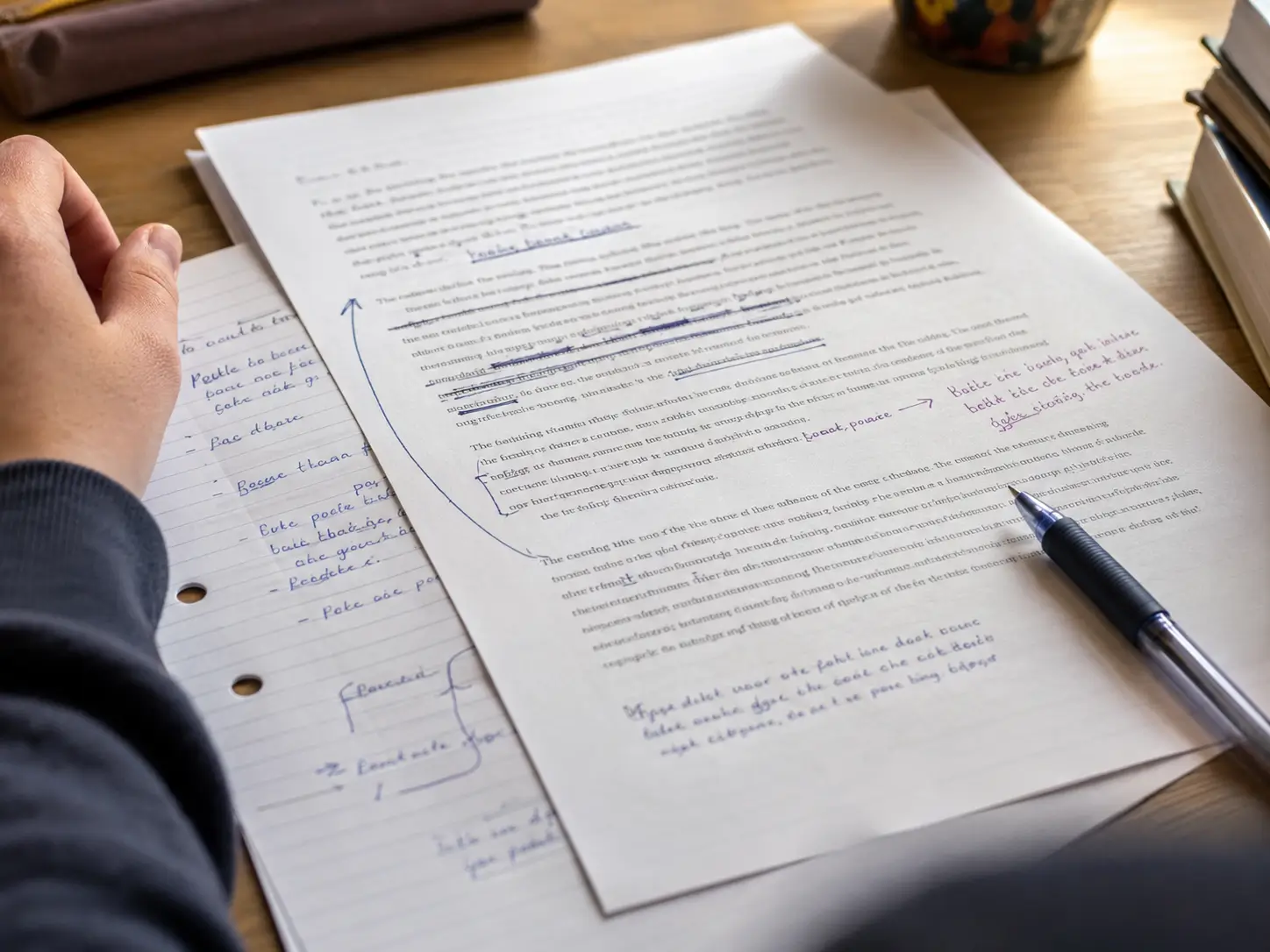
A-Level Literature Asks for an Argument of Your Own
The step up is in independence rather than volume. GCSE teaches a text and tells a student what to notice; A-Level expects a reading of their own, defended against critics who disagree with it. Students who were rewarded for reproducing a teacher's interpretation often find their marks stall in Year 12, and are rarely told that this is why.
The course is also wider by design: boards build their specifications around a spread of periods, including pre-1900 writing and Shakespeare alongside contemporary texts, so the comparison is across centuries rather than within a syllabus. And there is a coursework component marked by the school, which rewards planning and redrafting far more than late effort — one of the easiest places for an organised student to gain ground. Our A-Level tutoring works on both halves.
Where Literature Marks Are Actually Lost
Almost none of these is a gap in reading. They are the four habits that separate a student who knows the text from a student the examiner can reward for it.
Retelling the plot
The most expensive habit in the subject. Marks come from analysing how a writer builds an effect, not from proving the book was read. A fluent plot summary can score close to nothing on a question worth thirty marks.
Quotations that do no work
A long quotation dropped in and left to speak for itself. Short, precise, embedded quotations taken apart word by word score far higher — and are far easier to remember in a closed-book exam.
Context bolted on at the end
A paragraph of history with no bearing on the argument earns very little. Context scores when it changes how a specific line is read, which is a habit of writing rather than a body of extra revision.
Running out of time on the highest-tariff question
Literature papers are long and the biggest question is often last. Ten extra minutes perfecting an earlier answer routinely costs more marks than it gains.
Before any of this, the habits are built at KS3 English, where there is no board, no set text list and no closed-book exam waiting at the end of it.
Tell Us the Texts, We Will Prepare for Those
One free demo class with an experienced English Literature tutor — no payment, no obligation, and a clear read on whether the marks are being lost in the analysis, the evidence or the timing.