
One-to-One Online A-Level Tutoring for UK Students
The jump from GCSE to A-Level is the steepest in school, which is why one-to-one online A-Level tutoring works best. Content moves faster, questions go deeper, and grades decide university offers. Our tutors close the gap — subject by subject, specification by specification.
- AQA
- Edexcel
- OCR
- Years 12–13
- UCAS Grades
A-Level Subjects We Tutor
Deep, specification-exact support in the subjects that decide university offers — part of our full range of levels of tutoring, from 11+ to A-Level. Not at A-Level yet, or not sure which stage you need? How lessons actually run — matching, weekly slots, progress updates and what an hour costs — is the same at every level, and it is set out on our one-to-one online tutoring page.
A-Level Maths
Pure Maths, Mechanics and Statistics. From differentiation and integration to proof and modelling — taught for understanding, because A-Level questions punish memorised methods.
A-Level English
Literature analysis at university-preparation depth: critical perspectives, comparative essays and the sophisticated written argument examiners reward at A-Level.
Why Strong GCSE Students Struggle at A-Level
A-Level courses cover more content in less time, assume independent study, and ask questions that test application rather than recall. Students who coasted through GCSE often hit a wall in Year 12 — not because they lack ability, but because nobody taught them how to work at this level. One-to-one tutoring fixes both problems at once: your tutor reteaches the concepts that lectures moved past too quickly, and builds the study and exam habits A-Level success actually requires — the same targeted approach behind all of our exam preparation.
- Specification-exact teaching for AQA, Edexcel and OCR
- Past paper practice with examiner-style mark scheme review
- Essay and extended-response technique for top-band answers
- Year 12 foundations or Year 13 exam preparation — plans for both
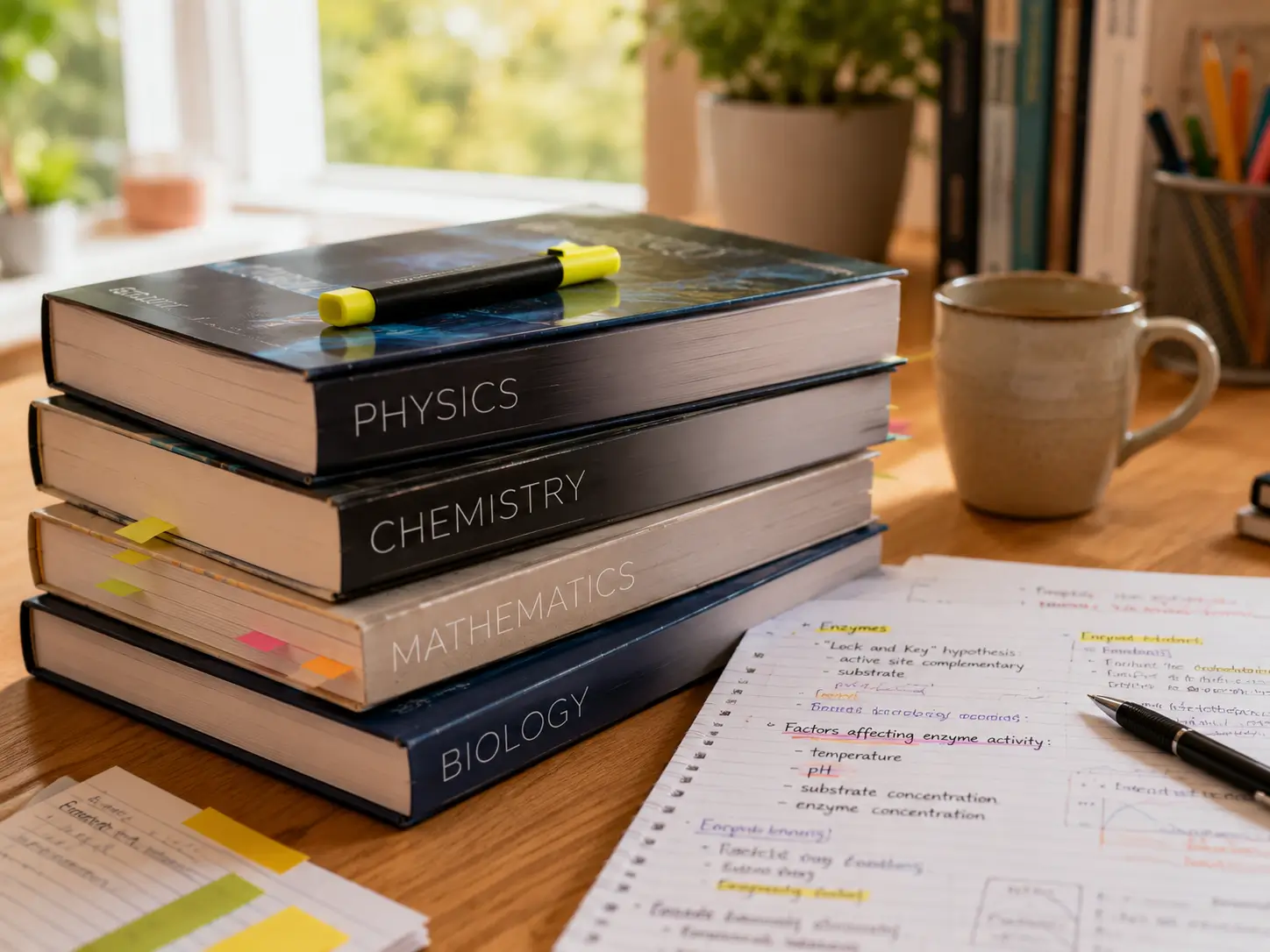
Grades That Meet Your University Offer
For most A-Level students, the target isn't abstract — it's the conditional offer on their UCAS application. Tutoring plans are built backwards from that target: which papers carry the marks, which topics are costing them, and what has to change before exam season. Parents and students receive progress updates after lessons, so everyone can see whether the trajectory matches the offer.

A-Level Tutors for AQA, Edexcel, OCR and Eduqas
At A-Level the choice of board changes more than the order of topics. Papers are weighted differently, the balance between recall and application shifts, and each board has settled habits in how it words questions and awards marks. AQA A-Level Chemistry, for instance, is assessed across three papers — two worth 35% each and a synoptic third worth 30% that carries 30 marks of multiple choice — with twelve required practicals running through the course. Other boards and subjects divide the same content differently. Every tutor works from your child's exact specification and that board's past papers, and we confirm which one that is from their own materials rather than assuming it from the school. The sciences additionally carry a Practical Endorsement, reported separately as Pass or Not Classified: it does not affect the A*–E grade, but universities see it.
Boards we teach to
- AQA
- Edexcel (Pearson)
- OCR
- Eduqas / WJEC
Bring a past paper or the student's own notes to the demo and we will name the board and route in the first few minutes.
A-Level Tutoring for Year 12 and Year 13
The two years need different work. Treating them the same is how Year 12 gaps end up being paid for in Year 13.
Year 12
Year 12 is where the damage is usually done, and where it is cheapest to undo. The step up from GCSE is steeper than almost anyone expects — content moves faster, questions stop signposting which method they want, and the volume of independent work rises sharply. Students who coasted to strong GCSE grades on recall alone tend to hit this first. Because Year 12 content underpins everything examined in Year 13, a gap opened in the autumn term is still costing marks eighteen months later. Tutoring at this stage is prevention, and it is the cheapest intervention available.
Year 13
Year 13 is a different job. The content is largely delivered and the constraint is time, so lessons shift towards synoptic questions that pull across the whole course, past papers under real timing, and the exam technique that separates a B from an A. For students holding conditional university offers the work becomes very specific: identify the exact gap between current performance and the offer grade, and close it in the weeks available. Retake students are welcome too, and usually need a diagnostic on which paper cost the grade rather than a full re-teach.
Our published rates apply the same way at both stages.
Why Online A-Level Tuition Works Better Than Local Tutoring
At GCSE, a good local tutor is usually findable. At A-Level the maths changes. You are no longer looking for someone who knows the subject — you are looking for someone who knows this specification, at this level, and has taken students through these papers before. The number of people within driving distance who meet that description for A-Level Further Maths or A-Level Physics is often zero.
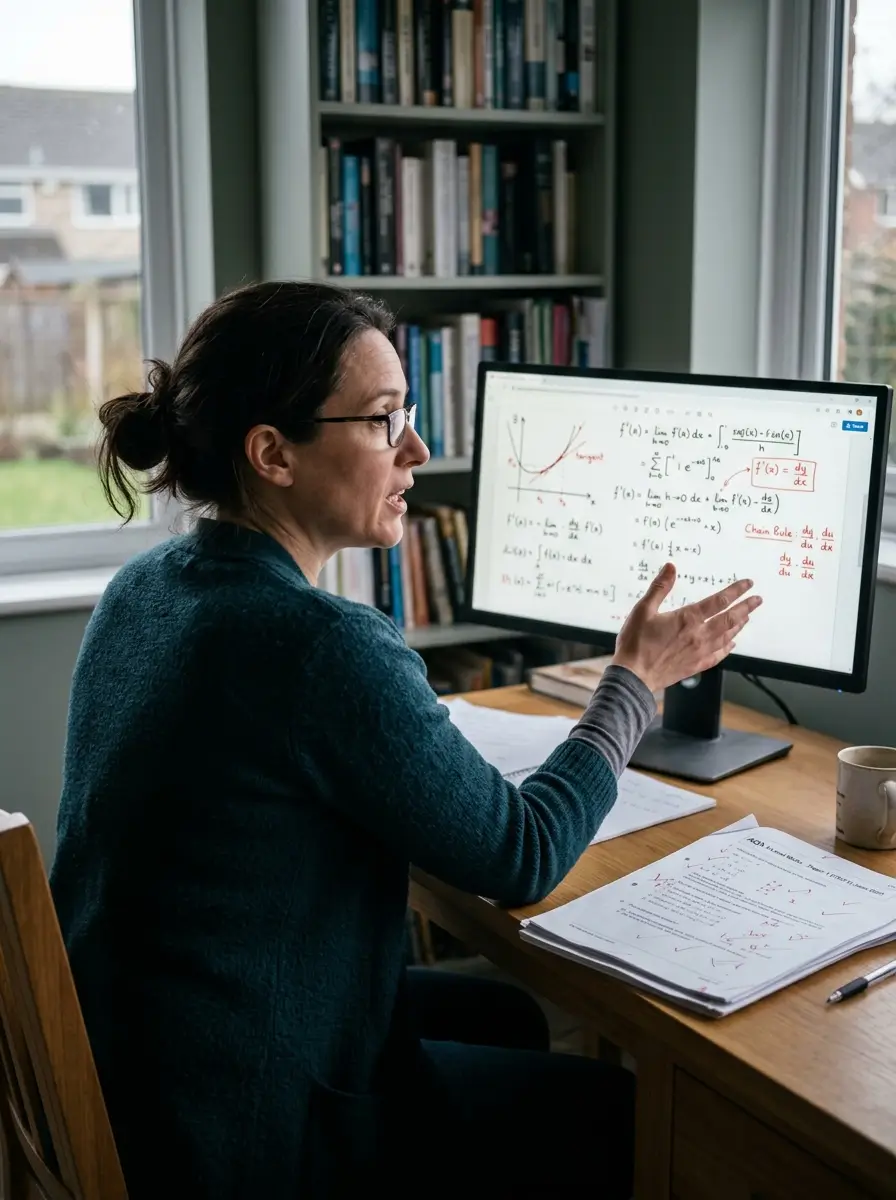
Online tuition removes distance from the equation entirely. A student in the Forest of Dean and a student in central London draw from the same specialist pool, and neither loses an hour a week to travel — an hour that matters a great deal in Year 13. Screen sharing also suits A-Level content better than a kitchen table does: past papers, mark schemes, worked calculations and annotated diagrams all sit on a shared whiteboard that can be saved and revisited, rather than on loose paper that gets lost.
Scheduling is the quieter advantage. A-Level students have free periods, part-time jobs and exam timetables that shift; online lessons flex around them instead of around a tutor's travel route.
A-Level Exam Preparation and Revision
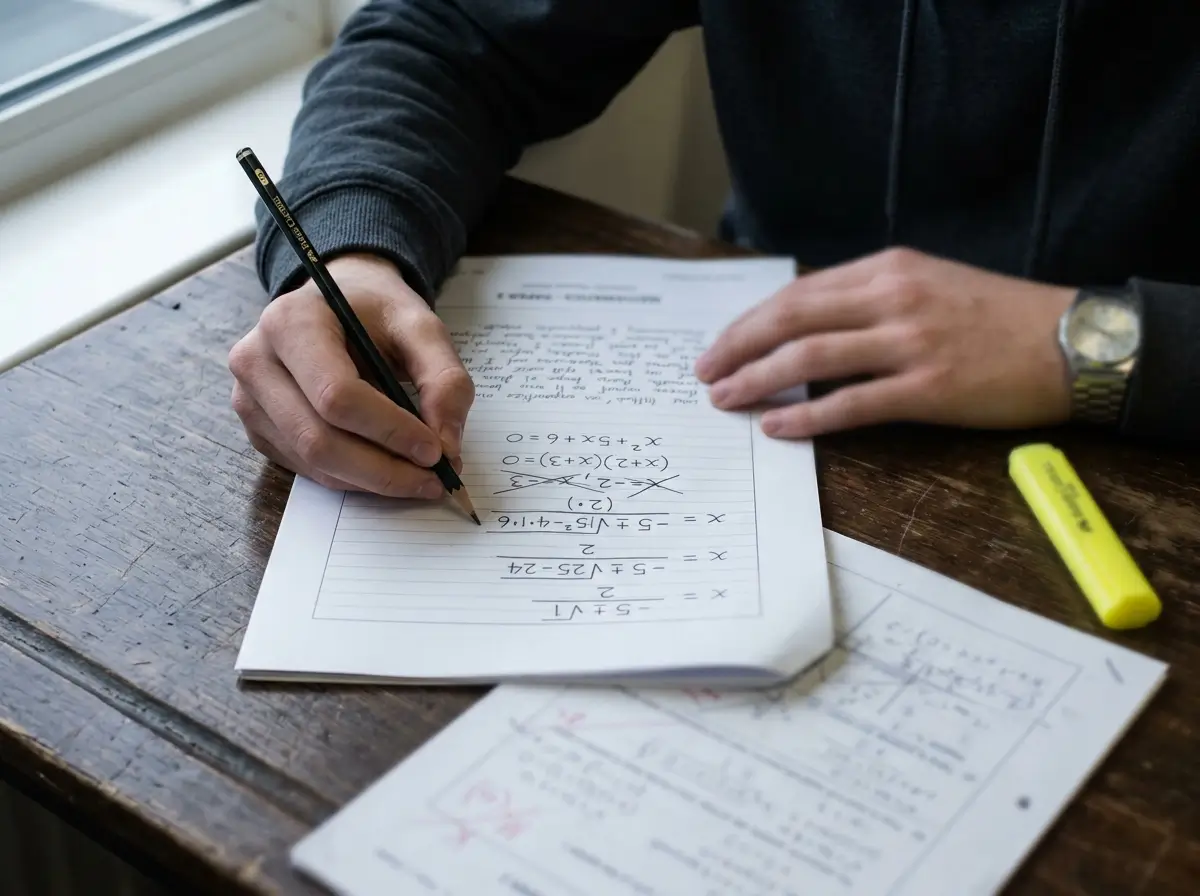
Most A-Level students who are underperforming do not have a knowledge problem — they have a retrieval and technique problem. They recognise the content when they see it and cannot produce it under timed conditions. Our exam preparation work targets that gap directly: past papers sat under real timing, mark schemes read the way an examiner reads them, and the specific habits that lose marks on questions the student genuinely understands — misreading command words, abandoning a multi-step calculation halfway, or writing everything known about a topic instead of answering what was asked. Synoptic questions get particular attention, because they are where A-Level differs most from GCSE and where revision built around single topics quietly fails. Where foundations are the real issue, we go back to them: GCSE-level gaps that survived into Year 12 are a common root cause and do not resolve on their own.
See How Online A-Level Tutoring Works
One free demo class with an experienced A-Level tutor — including an honest assessment of where your child stands against their target grades.
A-Level Tutoring Starts From £25 Per Lesson
Lessons are 1 hour. Your first demo class is completely free, there are no sign-up fees, and there's no contract — you can pause or stop at any time.
A-Level
from £25/lesson
1-hour lesson