One-to-One Online Maths Tutoring for UK Students
Most gaps trace back to one missed concept. We find it, fix it, then build forward — step by step, with precision.
Topics We Cover in Maths
From number work to A-Level calculus — taught to your child's exam board and current level.
Number & Fractions
Arithmetic, percentages, ratio and proportion — the foundation most gaps trace back to.
Algebra
Equations, inequalities, quadratics and simultaneous equations taught step by step.
Statistics & Probability
Data handling, distributions, hypothesis testing and the language examiners expect.
Calculus (A-Level)
Differentiation, integration and their applications — the steepest jump in school Maths.
Maths Tutoring for Every School Level
A clear path from KS3 foundations to A-Level mastery.
GCSE
AQA, Edexcel, OCR — past paper practice and exam technique that turns predicted grades into results.
Learn moreA-Level
Pure Maths, Mechanics and Statistics. The step up is steep — we close the gap fast.
Learn more11+
Mental arithmetic, problem-solving and non-verbal reasoning for grammar school entry.
Learn more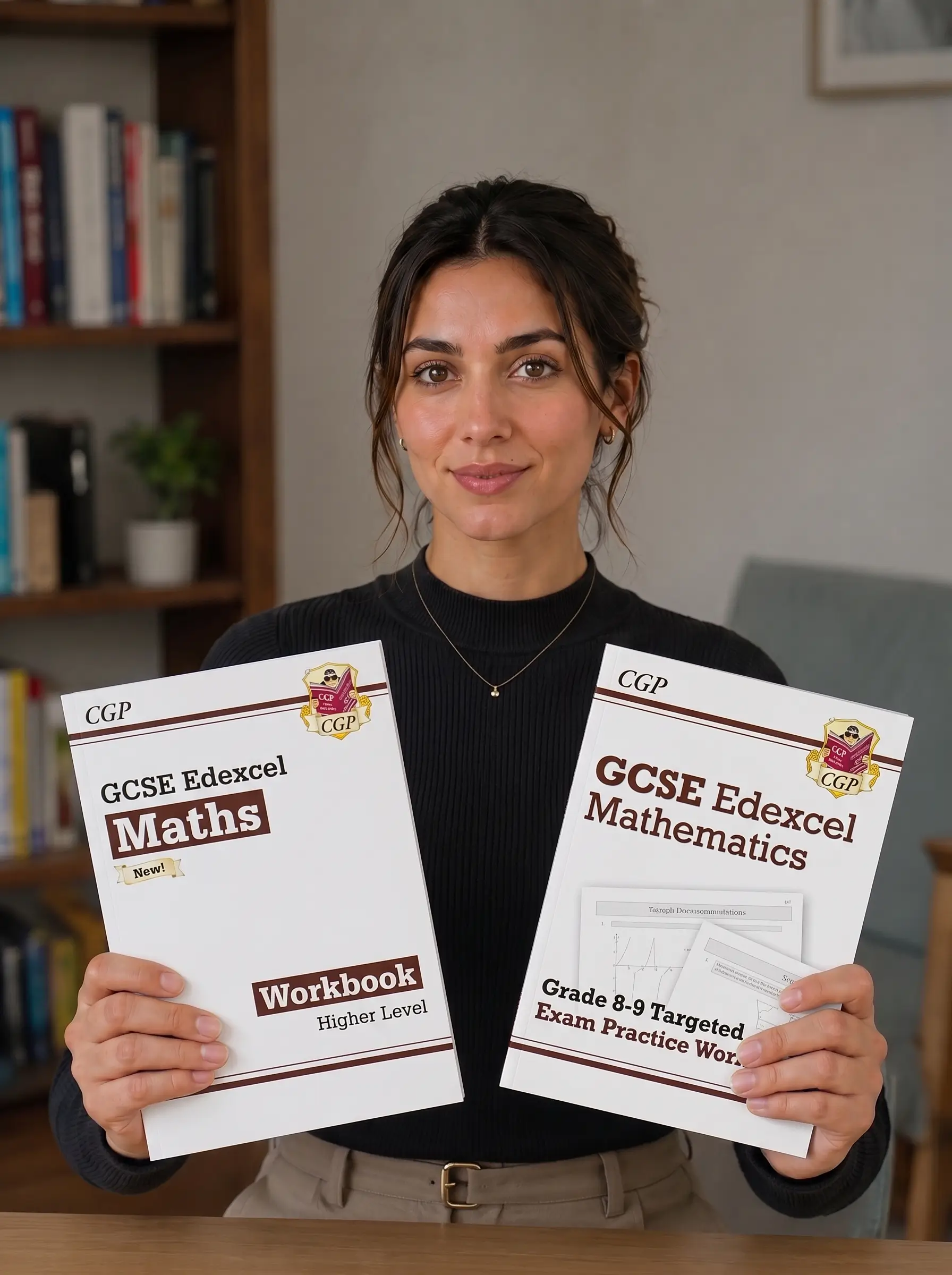
Taught to the Board and Tier Your Child Actually Sits
We cover all major UK exam boards for Maths — AQA, Edexcel, OCR and WJEC — at both GCSE and A-Level. Your child's tutor teaches to their exact specification and uses past papers and mark schemes from the board they will actually sit, so nothing is revised that will not be examined.
Foundation tier
Securing the core marks that guarantee a strong pass.
Higher tier
Mastering the harder algebra, graphs and problem-solving questions where the top grades are won.
If the school has not decided a tier yet, we can advise on which one fits based on actual past-paper performance.
Preparing for GCSE or A-Level Maths Exams?
Focused revision, past paper practice and exam technique that turns predicted grades into achieved grades.
See How Online Maths Tutoring Works
One free demo class with an experienced Maths tutor. No commitment. See exactly how we find and fix the gaps holding your child back.
How GCSE Maths Is Actually Examined
One of the papers has no calculator. Every board splits GCSE Maths across several equally weighted papers — AQA, Edexcel and OCR set three, WJEC and Eduqas two — and on all of them the first is sat without a calculator. That single fact reshapes revision: a student whose number work is shaky can hide it all year with a calculator to hand, then lose a large share of the qualification on the paper that takes it away. We test for that in the first lesson rather than in the spring.
Tier is decided before any of it. GCSE Maths is tiered. Foundation papers are graded 1–5 and Higher papers 4–9, so a student entered for Foundation cannot be awarded above a grade 5 however well they perform on the day. An over-cautious entry quietly caps a result months before anyone notices; an over-ambitious one leaves a student facing questions they cannot access and losing confidence they will need. If your child's school has not settled the tier yet, bring it to the free demo class. We will give you an honest read from actual past-paper performance, including when the honest read is not the one you were hoping for.
The boards differ in wording more than in content. AQA, Edexcel, OCR and WJEC all cover the same national curriculum, but they phrase problems differently and favour different question shapes. Practising the wrong board's papers gives a falsely comfortable read on readiness, so lessons use the board your child will actually sit from the first week.
A-Level Maths: The Biggest Step Up in School Maths
A-Level Maths is not optional in its structure the way most A-Levels are. Every student sits the same compulsory pure content — algebra, functions, trigonometry, calculus — and alongside it a compulsory applied half covering both statistics and mechanics. A student who liked algebra and disliked mechanics does not get to choose. That is worth knowing in Year 11, not in the second half-term of Year 12.
The step up is in fluency, not in topics. GCSE rewards a student who can complete a method correctly. A-Level assumes that method is automatic and spends its marks on what you do next. The students who struggle in Year 12 are usually not the ones who found GCSE hard — they are the ones who got a good grade slowly, and now meet questions where the GCSE step is line one of six.
Further Maths is a separate A-Level rather than an extension of this one, and it is worth deciding on early because schools often start it alongside. If your child is taking A-Level Physics too, the two reinforce each other directly: much of what makes Physics feel hard is maths arriving in an unfamiliar costume, and we teach them so that each one carries the other.
Where Maths Marks Are Actually Lost
Most lost marks in Maths are not lost because the maths was not known. They are lost in how the answer was written down. After enough papers the same handful of habits account for the bulk of them, and every one is fixable — which is why exam preparation usually moves a grade faster than more content does. The content gaps that do bite are predictable too: we have written up the GCSE topics students search for help with most, and if the grade has been slipping for a while rather than stalling on one topic, why a child falls behind in maths is the more useful read.
Not showing the working
The most expensive habit in GCSE Maths. Method marks are awarded for the steps, so a student who does it in their head and gets the answer wrong scores nothing — where the same student writing three lines would have kept most of the marks.
Rounding too early
Round in the middle of a multi-step calculation and the final answer drifts outside the accepted range. Carry the full value through and round once, at the end, to whatever the question actually asked for.
“Show that” questions
These give the answer away on purpose: the marks are entirely in the reasoning that gets there. Students who write the answer down, because they can see it in the question, score zero on questions they could fully do.
Units and conversions
Centimetres against metres, minutes against hours, area units against length units. The maths is right, the mark is gone, and this is the fastest category on the list to fix.
Graph and statistics questions
Gradients, intercepts, reading between plotted points and interpreting what a chart actually claims. Reliably under-practised, because they feel like the easy part right up until they are marked.
Algebra fluency
Not algebra as a topic — algebra as the thing every other topic sits on. Insecure rearranging quietly corrupts trigonometry, physics-style formulae and anything else built on top of it.
Maths Tutoring FAQs
Answers to questions parents ask before booking a free Maths demo class.