
One-to-One Online Science Tutoring for KS3 and GCSE
Science is three subjects wearing one name — and most students have one that drags the others down. We find the weak strand, fix it, and keep all three moving together.
Biology, Chemistry and Physics — Covered Together or Separately
For KS3 and Combined Science, one tutor covers all three strands. For Triple Science and A-Level, we recommend our dedicated subject tutors:
Biology
Cells, organisation, infection, bioenergetics and ecology — plus the required practicals and extended answers. Taking Triple or A-Level Biology? See our dedicated Biology tutoring.
dedicated Biology tutoringChemistry
Atomic structure, bonding, quantitative chemistry and rates — the strand where maths skills cost the most marks. Triple or A-Level student? See our dedicated Chemistry tutoring.
dedicated Chemistry tutoringPhysics
Forces, energy, electricity and waves — equations, units and rearranging under exam pressure. Triple or A-Level student? See our dedicated Physics tutoring.
dedicated Physics tutoringCombined Science or Triple Science — We Support Both
There are two GCSE science routes, and they need different tutoring. Our lessons adapt to the one your child is actually on — and if the choice has not been made yet, our guide to Combined versus Triple Science sets out what each route closes off.
Combined Science
The route most students take. All three sciences are examined across six shorter papers, so one weak strand pulls down the whole grade. Combined students usually work with one science tutor across all three strands.
Triple Science
Three individual GCSEs with more content in each. Triple students get subject-specialist support in the science that is costing them marks, rather than an even split across all three.
Either way, lessons follow your child's exam board — AQA, Edexcel or OCR — including the required practicals that appear in exam questions.
KS3 Science — Where GCSE Grades Are Really Decided
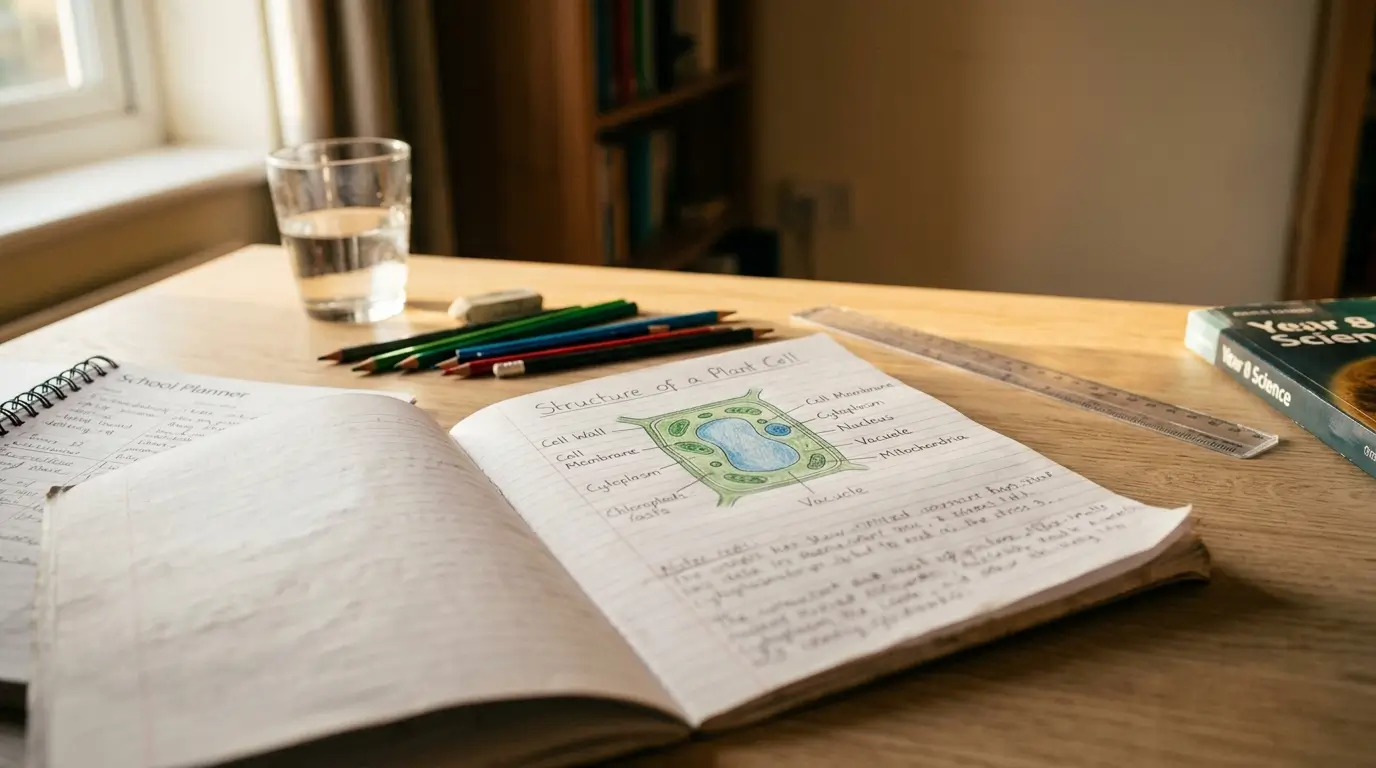
The ideas that decide GCSE science grades — cells, particles, forces, energy — are all introduced in Years 7 to 9, and students who leave KS3 with gaps spend GCSE running to catch up.
That stage is a page of its own: KS3 Science tutoring covers the three strands as the national curriculum sets them, the maths a science lesson assumes without teaching, and why two children in the same Year 9 can be a full year apart in what they have been taught.
Science Exam Boards We Teach To
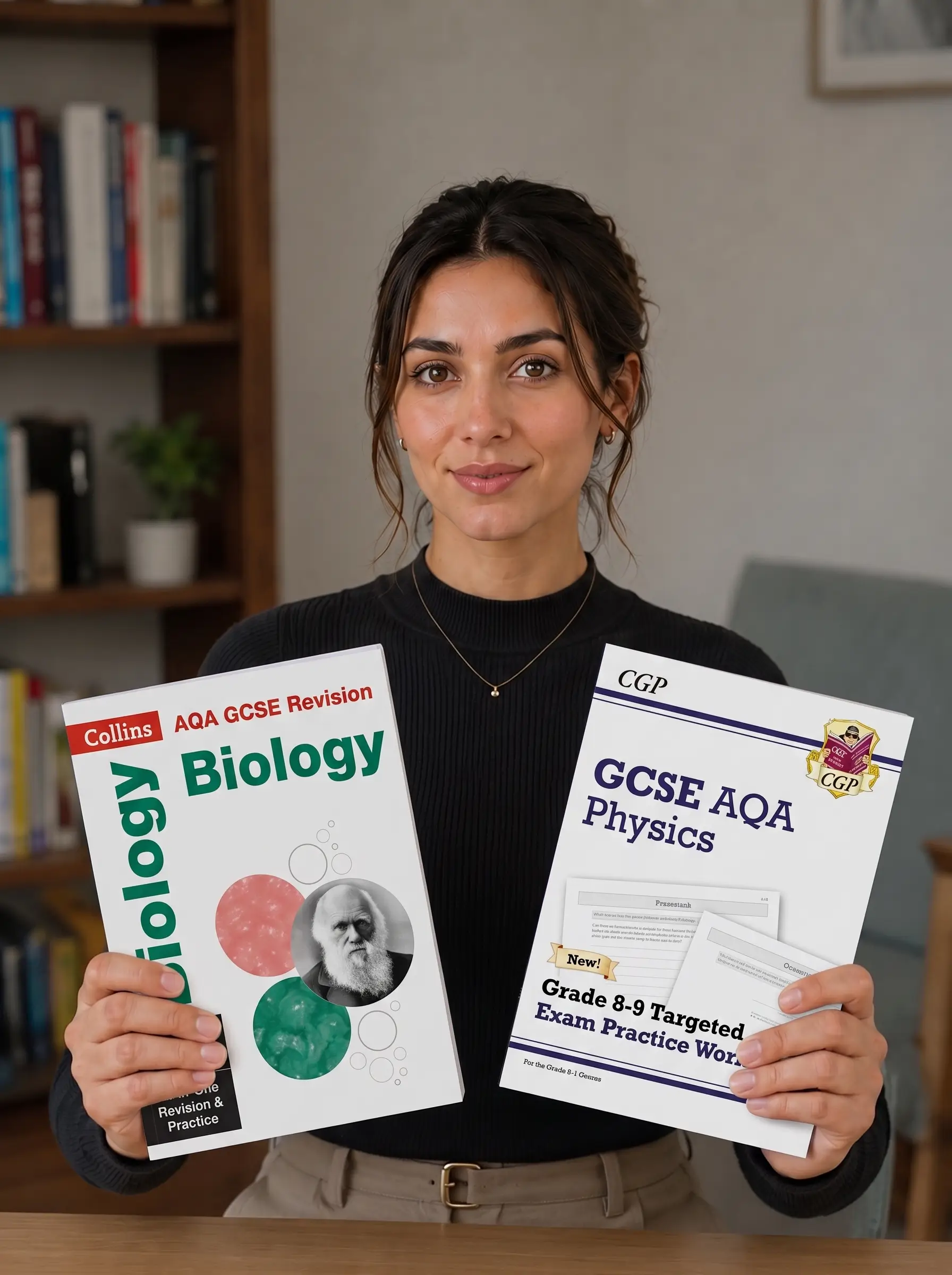
Combined Science is where board differences bite hardest, because the same two GCSEs are assembled differently depending on who sets them. AQA runs two routes — Trilogy and Synergy — which cover comparable content but structure the papers differently. OCR likewise splits into Gateway and Twenty First Century, the second teaching the science through applied contexts. Edexcel runs its own Combined Science award, and Eduqas appears in some English schools as WJEC's England-facing brand. We teach to all of them, and to the separate Biology, Chemistry and Physics GCSEs for Triple Science students. The practical consequence for a parent is simple: a student revising from the wrong board's past papers is getting a misleading read on how ready they are. We identify the board and route from your child's own exercise book in the first lesson.
Science at A-Level: Where the Three Subjects Separate
There is no A-Level called “Science”. After GCSE the three strands become genuinely separate subjects with separate specifications, separate required practicals and very little overlap — A-Level Biology and A-Level Physics share almost nothing beyond a habit of careful reasoning. Students who arrive expecting more of GCSE Combined Science are usually surprised by how quickly that changes.
So at A-Level we tutor by subject specialist rather than by strand: A-Level Biology, A-Level Chemistry and A-Level Physics, each taught by a tutor who works in that subject rather than across all three. If your child is choosing options in Year 11, the A-Level tutoring page explains what the step up actually involves.
Where Science Marks Are Actually Lost
Across GCSE Science papers the same four gaps recur — and none of them is really about knowing less science.
01
Required practicals
Examined in the written papers rather than assessed separately, so students who revised theory alone meet questions about method, variables, error and analysis that feel unfamiliar.
02
Six-mark extended responses
Marked on structure and linked reasoning, not on volume. Students who know the science routinely under-score purely on how the answer is organised.
03
Maths in science
Catches out more students than the science itself: rearranging equations, standard form, percentages, significant figures and reading values off a graph under time pressure.
04
Command words
Describe, explain, evaluate and compare each want a different shape of answer. Treating them as interchangeable costs marks on questions the student could otherwise answer.
We teach all four deliberately rather than hoping they arrive with practice, which is also how we approach exam preparation more broadly.
What One-to-One Online Science Tuition Actually Looks Like
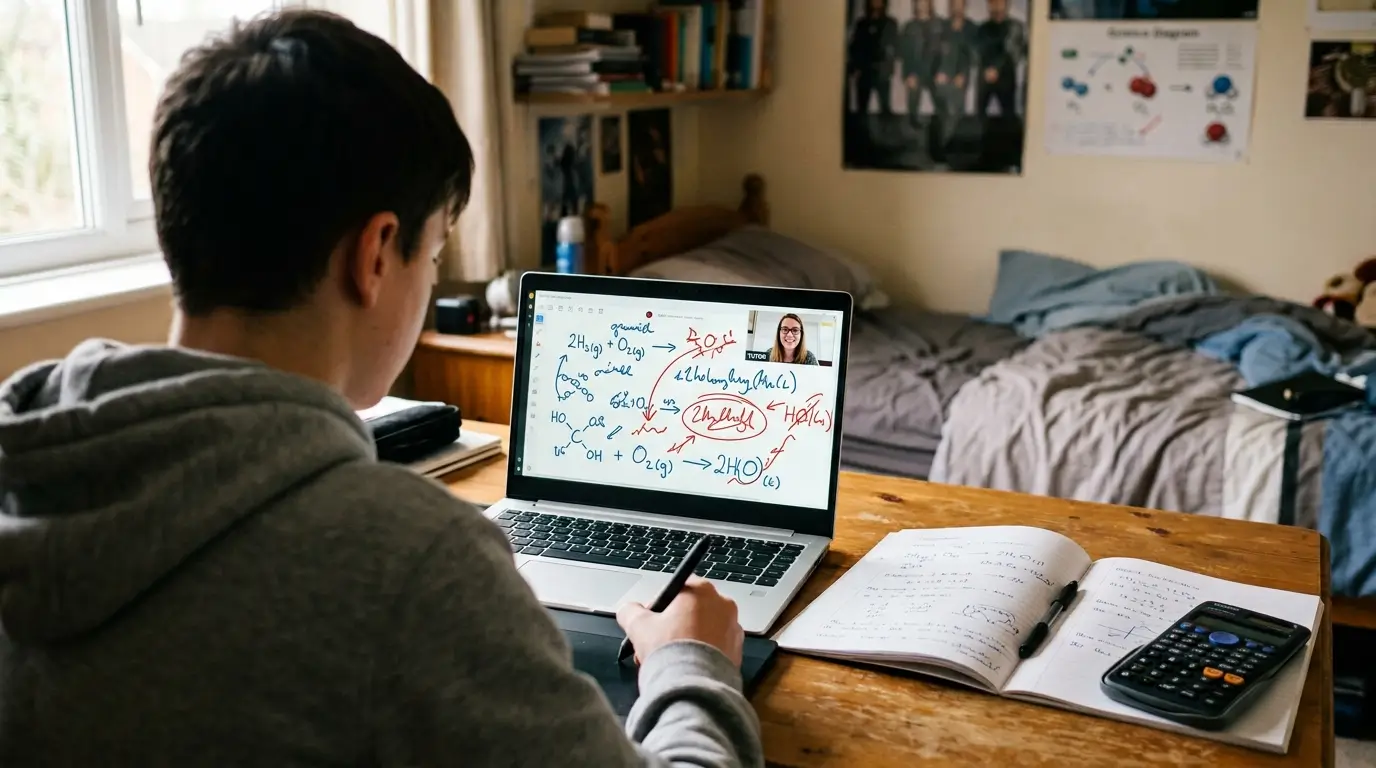
Lessons run for an hour, one-to-one, on video with a shared whiteboard — science tutoring at home, without the travel and without a class of thirty. Because nobody else is in the room, your child can admit they did not follow something the first time, which is the single biggest reason one-to-one moves grades faster than any other format.
A first lesson is diagnostic rather than a lecture. The tutor works through recent classwork or a past paper question and watches how your child answers, not just whether the answer is right — where the method breaks down, which command words get misread, whether a wrong answer came from the science or from the maths inside it. After that, lessons alternate between securing weak topics and practising exam questions on them, with the balance shifting towards timed papers as exams get closer. Parents get a short summary of what was covered and what to work on before the next session.
Science Tutoring for Adults and Resit Students
Not every science student is fourteen. Lessons are one-to-one and online, scheduled around work rather than a school timetable, and there is no shared classroom to feel self-conscious in.
Adults come back to GCSE Science for:
- Access to Higher Education courses
- Nursing and healthcare applications
- Teacher training entry requirements
- A qualification never finished first time
Resit students — at any age — need something different from first-time students: a diagnostic on which paper and which topics actually cost the grade, rather than a full re-teach of two years of content.
See How Online Science Tutoring Works
One free demo class with an experienced science tutor — including a quick check of all three strands to find where the marks are leaking.
Science Tutoring FAQs
Answers to questions parents ask before booking a free Science demo class.